Buying features - prioritizing with poker chips
If you won the lottery and you saw 10 million dollars in your bank account tomorrow, what would you do? You would probably buy a lot of things... right? But actually you do not need everything you would buy, do you? Ok, you would have a lot of spare money, so there's no problem.
But what if you had only a hundred dollars in your account? What would you buy? You would have to think about it more carefully and prioritize.
The product owner needs to define what is really important for him.
If you ask him what does he want for a 2 years project (10 million) he will say: "I want everything!", but if you break down the project into small iterations (sprints) and ask him to prioritize what does he want for a small chunk of time, that's when the important things come up.
A good way to show the product owner that he does not have 10 million available is making him buy features with a limited amount of money.
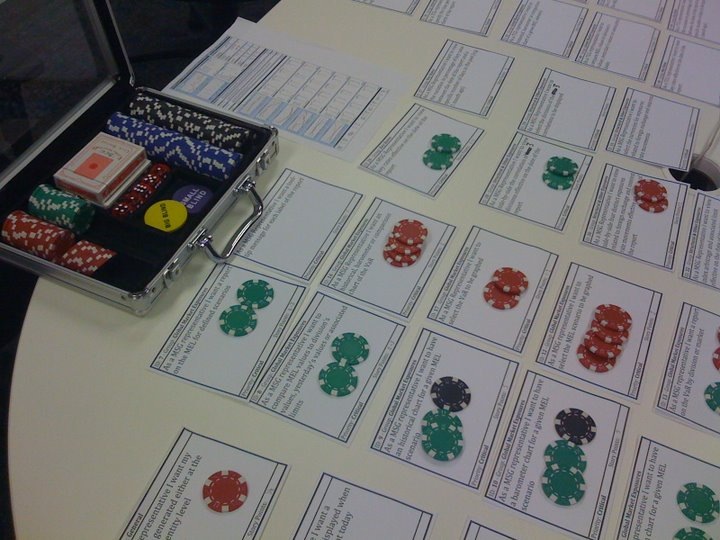
How does it work?
Before starting the poker chips session, we need a list of estimated user stories. We call it Master Story List (MSL), or Product Backlog. There are many ways of facilitating an estimation session, I like planning poker. But always remember: The team gives the estimates.
Basically you need to define how much a story point costs and give a certain amount of poker chips to the client according to the size of your iteration. And then ask him to buy what he wants for the next iteration.
It is interesting because from my experience as long as he has money, he buys everything, but then when he starts running out of chips, that's when the real process takes place.
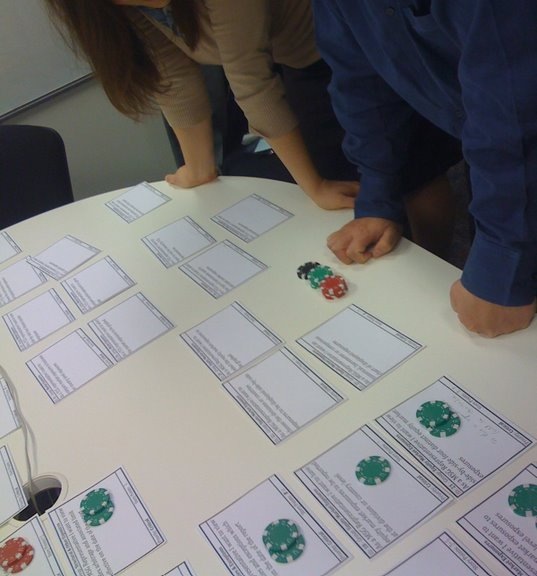
The output will be a list containing the most important user stories at that time.